


Why Does the Priest Wear a Cope During the Eucharistic Procession, and Not a Chasuble?
In the Catholic liturgy, each type of vestment worn by the priest has its own meaning and specific use. Many people wonder: why does the priest wear a cope during Eucharistic processions or Eucharistic adoration, instead of a chasuble? To answer this, let us look at the meaning of these two vestments.
⇒⇒ You can see all Chasubles/Vestments, please click here
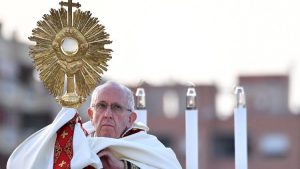
1. The Chasuble – Reserved for the Mass
The chasuble is the principal vestment of the priest when celebrating Holy Mass.
Meaning: it represents the priest acting in persona Christi (in the person of Christ), offering Himself as the High Priest and presiding over the Eucharistic sacrifice on the altar.
Therefore, the chasuble is always connected with the altar – sacrifice – Holy Mass.
2. The Cope – For Liturgical Rites Outside of Mass
The cope is a long liturgical cloak with a hood or decorative clasp, commonly used in:
Eucharistic Adoration
Eucharistic Processions
Eucharistic Benediction
Other solemn liturgical celebrations outside of Mass (for example, processions on major feasts, solemn Liturgy of the Hours).
Meaning: the cope expresses solemnity and reverence, but is not linked to sacrifice. It clearly distinguishes these rites from the Holy Mass.
3. The Eucharistic Procession – Not the Mass
During a Eucharistic procession, the priest is not celebrating Mass, but rather leading a solemn liturgical act of adoration outside of Mass.
Therefore, he wears the cope, which emphasizes that this is a rite of veneration and worship of Christ in the Eucharist, not the Eucharistic sacrifice itself.
4. The Meaning of the Humeral Veil
When giving Eucharistic Benediction, the priest also wears the humeral veil to cover his hands while holding the monstrance.
Meaning: this emphasizes that the blessing comes from Christ Himself in the Eucharist, not from the priest. The priest is only the minister and servant.
5. A Lesson in Liturgy
By distinguishing between the chasuble and the cope, we can see:
The Mass is the sacrifice of salvation, which requires the chasuble.
Eucharistic processions and adoration are acts of worship and praise, which call for the cope, to show solemnity while clearly separating them from the celebration of the Mass.
Conclusion: The priest wears a cope during the Eucharistic procession because it is a liturgical rite outside of Mass. Different vestments are not merely for beauty; they also carry deep theological and liturgical significance, helping the faithful understand the distinction between the Eucharistic sacrifice of the Mass and the rites of adoration of the Blessed Sacrament.
Thank you.
Refer to priestly vestments and place orders for liturgical garments in Vietnam.
Easy Online Shopping: Convenient, secure, and reliable online shopping with worldwide.
Elevate your liturgical attire with the elegance and craftsmanship of Vietnamese vestments. Visit our website to explore and order today, and experience the beauty of tradition!
Website: https://chasublesvn.com/
In Vietnamese: https://mayaoconggiao.com/danh-muc/ao-le-linh-muc/
Please, Contact us to send samples and request a quote
Customer Support
E-mail:chasublesvn@gmail.com
Phone:+84 977 019 792 ( Skype, WhatsApp, Viber)
Full name: NGUYEN VAN THAP from Viet Nam
